

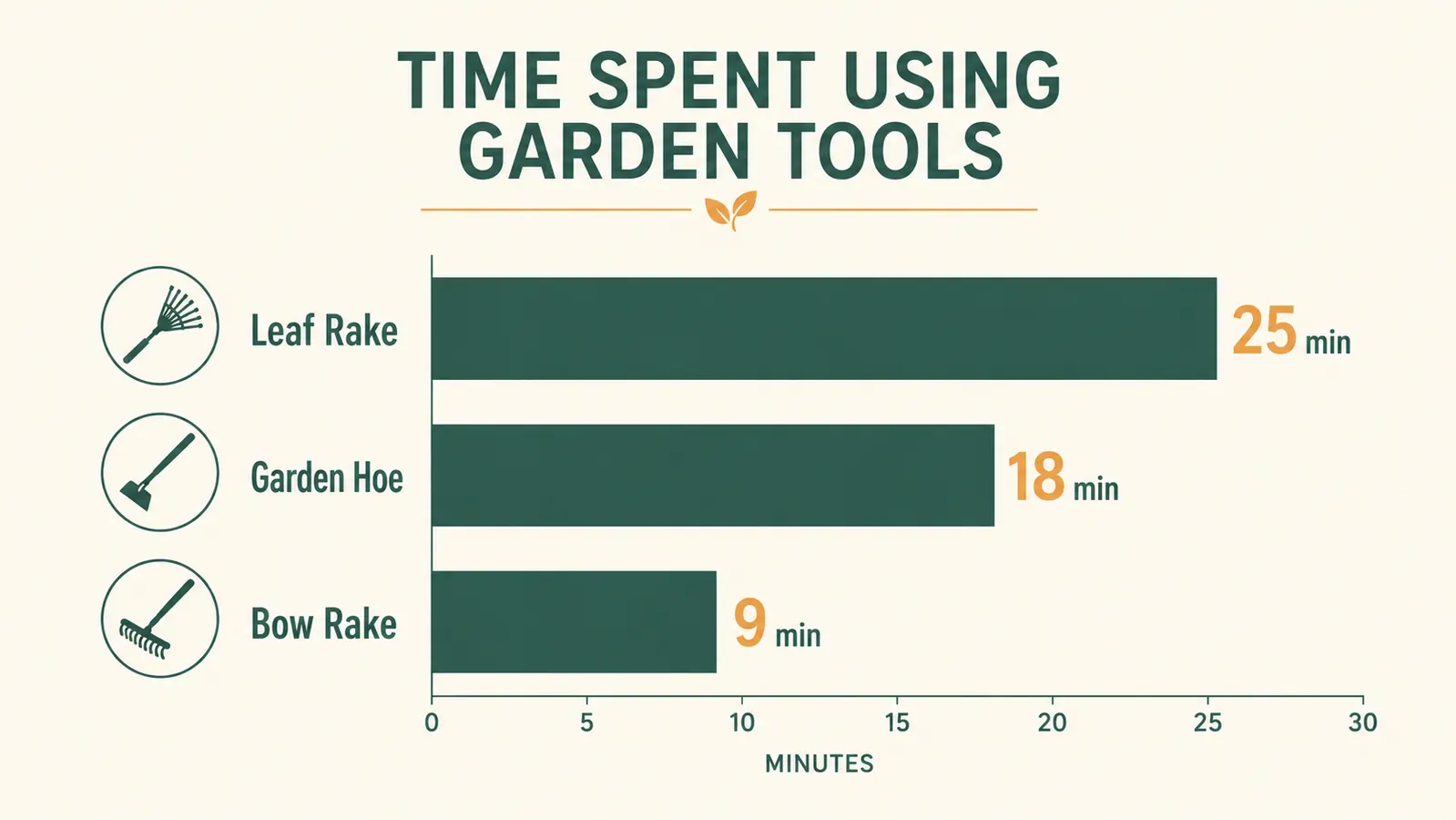
For years I leveled every new bed in our yard with a plain leaf rake and a lot of stubbornness, dragging it back and forth over clumped, root-tangled dirt until my shoulders gave out before the bed ever got flat. It wasn't until my neighbor loaned me her Walensee bow rake to level a strip along our sloped side yard that I understood what I'd been missing. That flat steel back and those seventeen tines did in nine minutes what used to eat up half my Saturday morning.
If you've ever tried to smooth a new bed, break up compacted clay, or pull thatch out of a patchy lawn with the wrong tool, you already know the frustration. A bow rake is built specifically for that middle-ground work, the heavy dirt-moving jobs that are too rough for a leaf rake and too slow for a shovel. Here are ten reasons this one earns a permanent spot leaning by my shed door.
Stop Fighting Compacted Dirt With the Wrong Rake
A leaf rake bends and a hoe wears you out. A good bow rake does both jobs at once, in a fraction of the time. Check today's price and specs on the Walensee bow rake on Amazon before your next bed prep day.
Amazon Check Today's Price on Amazon →The Flat Back Levels Soil in One Pass
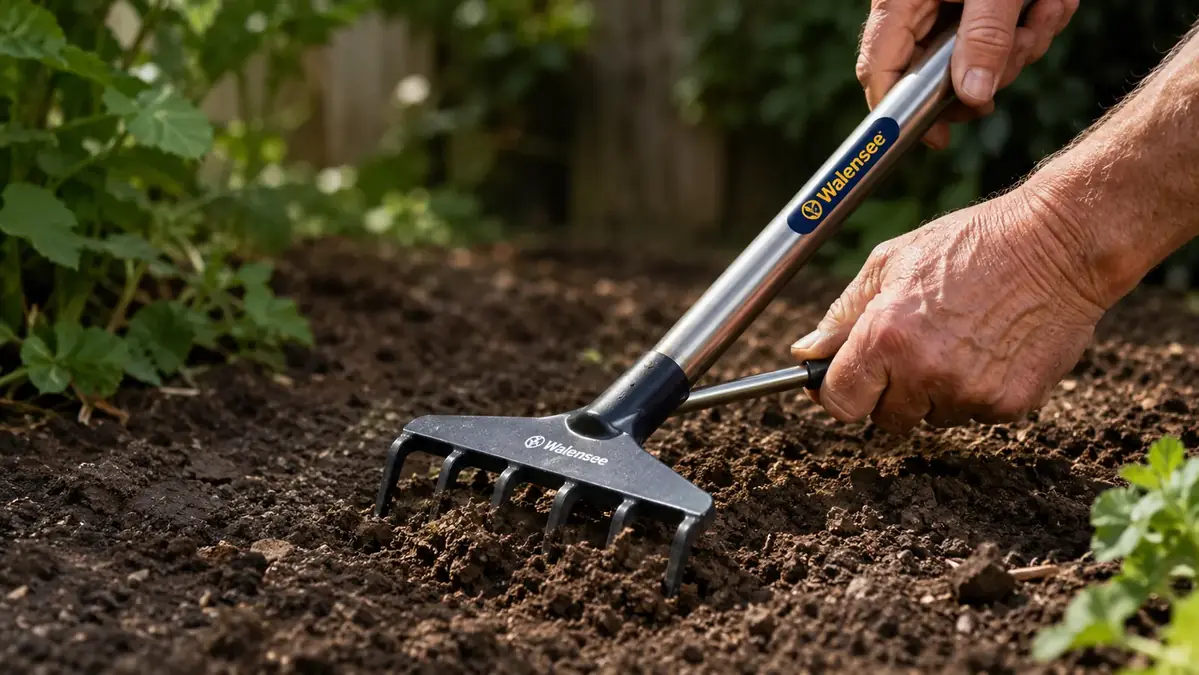
This is the whole reason a bow rake exists. Flip it over and the back of the head is a straight, rigid steel bar, so instead of dragging tines through loose dirt and hoping it settles flat, you drag a flat edge across it and it just is flat. I use that back side on every new bed before I plant, and it turns a lumpy, freshly turned patch of soil into something smooth enough to run a string line over in a couple of passes.
17 Steel Tines Break Up Clumps Fast
Before the flat side ever touches a bed, the tine side does the rough work. Seventeen steel tines dig into compacted dirt and clay clumps and pull them apart in a way a leaf rake's thin wire tines simply can't handle. On the heavy clay patch behind our garage, this bow rake broke up chunks I used to have to stomp on with a shovel first. That's the difference between fighting your soil and actually working with it.
Heat-Treated Manganese Steel Holds Up to Heavy Clay
I've bent cheap rake heads before, usually right at the point where the tines meet the crossbar, trying to pry up a root or lever out a rock. The head on this bow rake is heat-treated manganese steel, and after a full season of working our stubborn clay soil, mine hasn't so much as flexed. If you've got the kind of dirt that fights back, that head strength is not a nice-to-have, it's the whole reason the tool survives past one season.
63 Inches of Handle Keeps Your Back Straight
A short-handled rake means bending at the waist for every stroke, and after an hour of that my lower back is done for the day. The 63-inch handle on this one lets me work standing mostly upright, which matters a lot more once you're past fifty and your knees and back start keeping score. I've read through the full <a href="/walensee-bow-rake-review-long-term">long-term Walensee bow rake review</a> and the handle length comes up again and again as the detail people notice first.
Stainless Steel Handle Won't Splinter or Rot
I've owned wood-handled rakes that cracked after two winters left out against the shed wall, and I've had a splinter or two to show for it. This handle is stainless steel end to end, so it doesn't swell, crack, or splinter the way a wood handle does after a few seasons of rain and sun. It's also noticeably stiffer under load, which you feel the moment you lean into a stubborn patch of compacted dirt.
It Pulls Thatch Without Tearing Up Healthy Grass
Our back lawn had a thick mat of thatch built up along one shaded corner, and I was worried a metal rake would just rip the whole patch bare. The tines on this bow rake are firm enough to pull matted thatch loose but flexible enough that they glide over healthy grass without shredding it. I walk through the exact technique step by step in my guide on <a href="/how-to-level-soil-and-remove-thatch-with-a-bow-rake">how to level soil and remove thatch with a bow rake</a>, but the short version is it takes real patience out of a job that used to feel destructive.
It Spreads Mulch, Gravel, and Topsoil Evenly
Dumping a wheelbarrow load of mulch or topsoil in one spot and then spreading it by hand with a shovel is slow, uneven work. The wide tine head on this bow rake pulls loose material across a bed in long, even strokes, so a pile that used to take me twenty minutes to spread now takes about five. I use it every spring when we top off the mulch around the perennial beds along the fence line.

One Tool Replaces a Rake, a Hoe, and a Leveling Board
Before this bow rake, prepping a new bed meant three separate tools: a hoe to break up dirt, a leaf rake to gather debris, and a scrap board dragged flat to level it. This one tool covers all three jobs, which means less walking back to the shed mid-project and less clutter leaning against the fence. When I'm working a bed on a hot afternoon, not having to swap tools three times is worth more than the spec sheet lets on.
It Pulls Rocks and Roots Out of New Beds Fast
Every time we've broken new ground for a bed, we've hit a layer of buried rocks, old roots, or construction debris left behind by whoever built the house. The steel tines catch and drag that debris to the surface in a way soft tines just skate over. I cleared a whole strip of rocks along our side yard in about half the time it took me the previous year working with a hand cultivator.
It's Built to Survive Being Left Out in the Weather
I'll admit it, this rake spends more nights leaning against the shed than it does properly put away, and after more than a year of that it still doesn't show rust on the head or corrosion on the handle. At a price under twenty-five dollars, that kind of durability is what actually makes it worth buying instead of replacing a cheap rake every other season. Check today's price on Amazon and you'll see why the reviews keep circling back to how long it lasts.
What I'd Skip
I'd skip the ultra-lightweight aluminum bow rakes that show up cheaper online. They flex under real clay and compacted soil, which defeats the whole purpose of switching from a leaf rake in the first place. I'd also skip anything with a fixed-length handle under 54 inches if you're taller than average or dealing with back trouble, since you'll end up bent over the same way you were with your old rake.
A bow rake doesn't fight your soil. It just flattens it.
Your Back (and Your Beds) Will Thank You
Once you've leveled a bed in nine minutes instead of twenty-five, you won't want to go back to a leaf rake and a scrap board. See today's price on the Walensee bow rake on Amazon.
Amazon Check Today's Price on Amazon →