
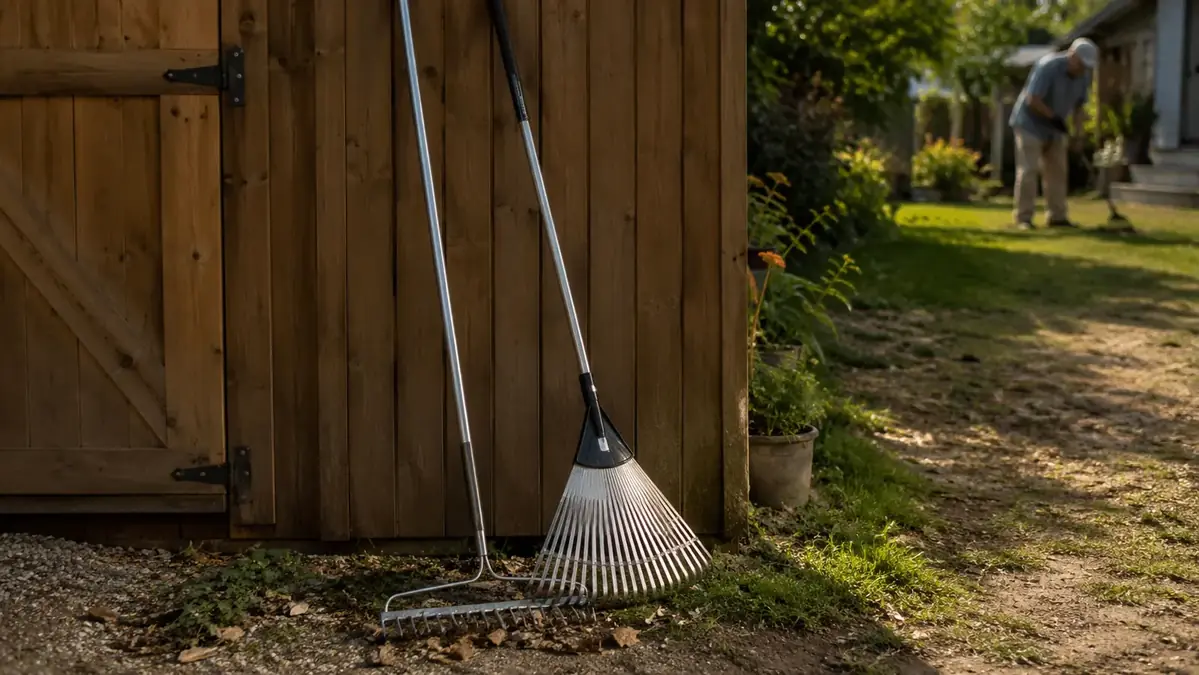
If you've ever grabbed a leaf rake to break up hard, compacted soil, you already know the problem. Those thin, springy tines bend, skid across the top of the dirt, and leave you sweating over a patch of ground that barely budged. That's not a leaf rake being cheap or badly made. That's a leaf rake being asked to do a bow rake's job.
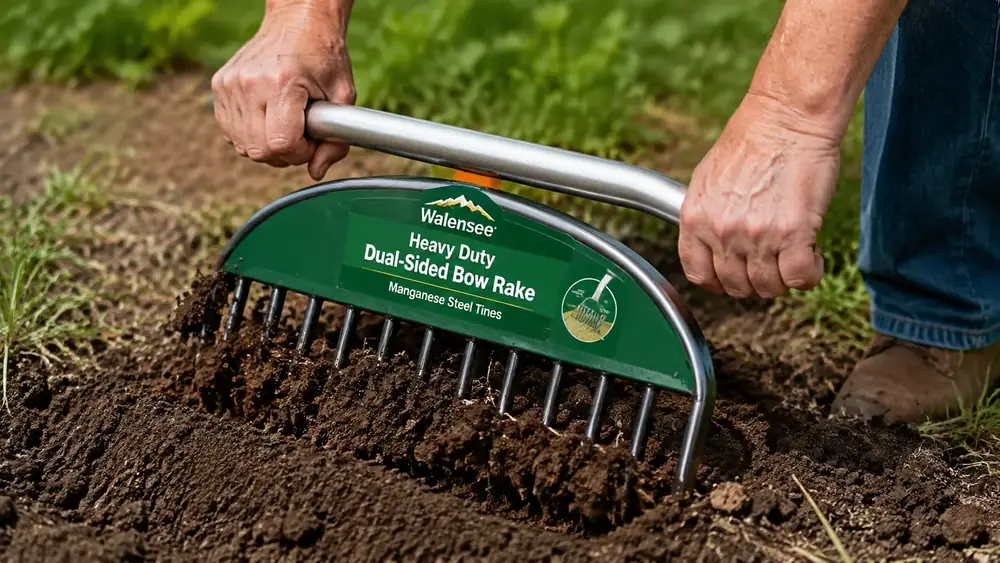
Here's the short answer. If you're leveling soil, breaking up thatch, prepping a bed, or spreading gravel and mulch, you want a bow rake, specifically something built like the Walensee Heavy Duty Dual-Sided Bow Rake, 63 inches of stainless steel handle, a heat-treated manganese steel head, and 17 tines that don't flex under real pressure. If you're clearing leaves off an established lawn without tearing up the grass underneath, that's a leaf rake's job, no bow rake required. Most yards eventually need both. Neither one replaces the other, and that's exactly where people get it wrong.
I keep both hanging in my shed, and I still see gardeners at the hardware store standing in the rake aisle asking which one to buy like it's a single decision. It isn't. Below is the actual breakdown, spec by spec, plus where each tool earns its keep and where it falls apart.
Weight and grip matter here too, more than most buying guides mention. A bow rake needs enough heft behind the head to break ground on the first pull, otherwise you're just leaning on it and going nowhere. A leaf rake needs the opposite, light enough that you can sweep it side to side for twenty minutes without your shoulder giving out halfway through the yard. That single design tradeoff, heavy and rigid versus light and flexible, is really the whole comparison in one sentence.
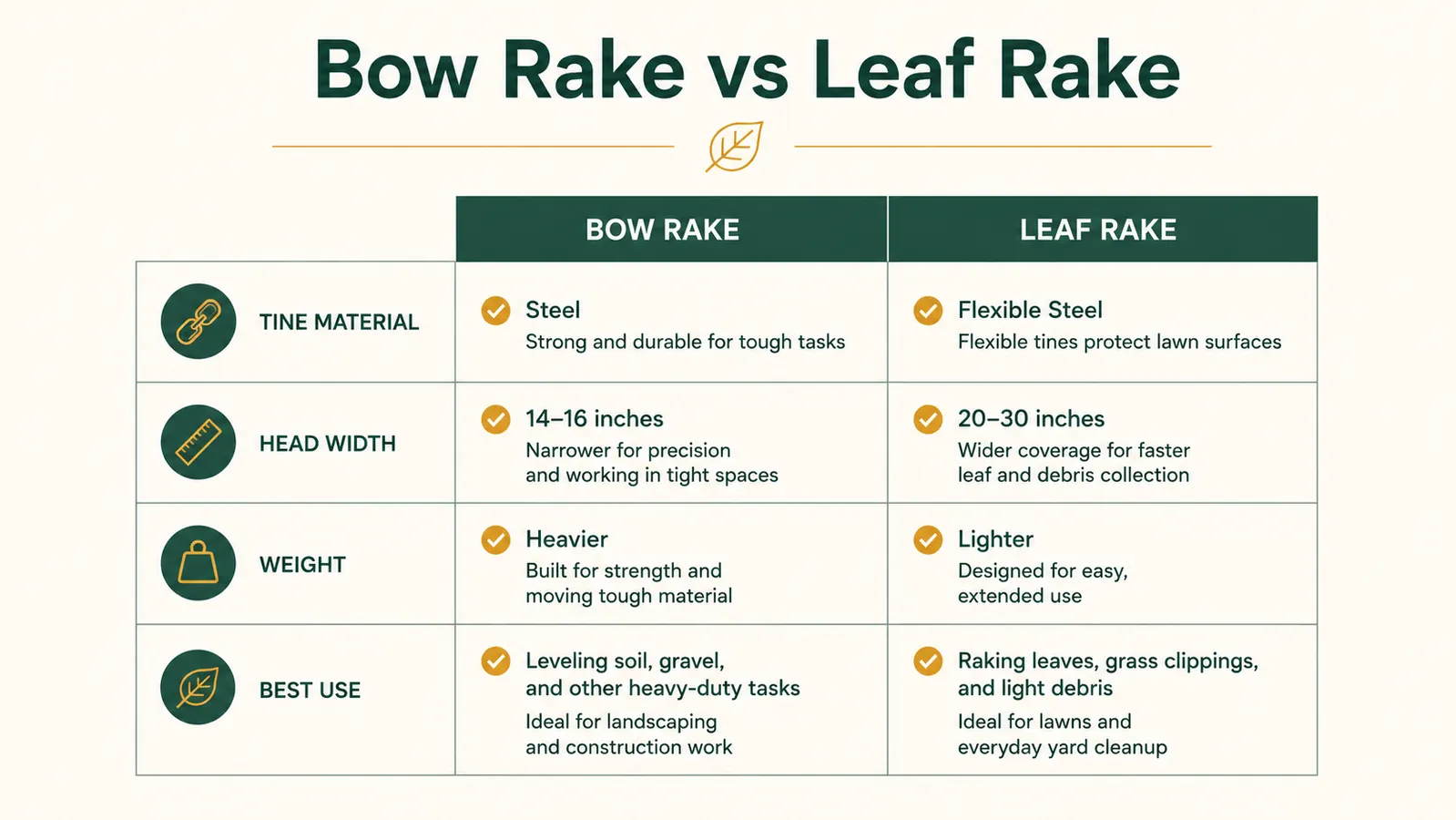
| Spec | Walensee Bow Rake | Standard Leaf Rake |
|---|---|---|
| Best For | Soil leveling, thatch removal, gravel and mulch spreading | Gathering leaves and light debris off grass |
| Tine Material | 17 heat-treated manganese steel tines, rigid | Flexible plastic or spring-steel fan tines |
| Head Design | 14-inch dual-sided head, tines on one side, flat leveling edge on the other | 20 to 24-inch flexible fan, single-sided |
| Handle | 63-inch stainless steel handle | Usually aluminum or wood, 54 to 60 inches |
| Weight | About 3.7 lbs, substantial in hand | Under 2 lbs, built for speed |
| Breaks Up Compacted Soil? | Yes, that's its main job | No, tines skid and bend |
| Safe on Established Grass? | Not designed for it, will gouge turf | Yes, built specifically not to damage grass |
| Current Price | Check today's price on Amazon | Budget-friendly option |
| Durability Under Heavy Use | Manganese steel head resists bending for seasons | Tines commonly splay or crack within a season or two of hard use |
Why These Two Tools Get Confused
Part of the mix-up is that both tools are called rakes, both have long handles, and both end up leaning in the same corner of the shed. Past that, they're built for opposite jobs. A bow rake is a soil tool that happens to have tines. A leaf rake is a debris tool that happens to look similar from across the yard. Picking based on the word rake alone is how someone ends up bending a cheap leaf rake trying to level a bed, or scratching bare patches into a healthy lawn with a bow rake that was never meant to touch grass.
I didn't fully understand the difference myself until my second year in this house, when I tried breaking up a hard-packed patch under an old swing set frame using the only rake I owned at the time, a flimsy leaf rake left behind by the previous owners. Fifteen minutes in, two tines were bent sideways and I'd barely scratched the surface. That's the afternoon I bought my first real bow rake, and it hasn't left the shed since.
Retailers don't help much either. Walk down a big box hardware aisle and you'll often find both tools racked together under a single rakes sign, sorted by price instead of purpose. Nobody's pointing out that the fifteen dollar option three feet away does a completely different job than the twenty four dollar option next to it. You're left to guess, or learn the hard way the way I did.
Where the Walensee Bow Rake Wins
The bow rake earns its keep the moment the ground fights back. Two years ago I had a pair of gopher mounds and a low spot near the mailbox post where water pooled every time it rained. A leaf rake would have laughed at that job. I pulled out the Walensee, flipped it tines-down, and dragged the 17 manganese steel teeth through packed clay and old grass roots until the mounds broke apart and the ground leveled out. Then I flipped it over, ran the flat back side across the same patch, and had a smooth seedbed inside twenty minutes.
That flat back is the detail most people miss when they're comparing rakes online. A single-sided tool makes you switch equipment halfway through a leveling job. The dual-sided head means one rake handles breaking up soil, pulling out thatch, and smoothing everything flat, all without setting it down and walking back to the shed. At 63 inches, the stainless steel handle is also long enough that I'm not hunching over, which matters more every year I do this kind of work.
The 17-tine head also means fewer passes to get the same result. A lot of cheaper bow rakes skimp down to 12 or 14 tines to save on steel, which sounds minor until you're dragging one across a full bed and realizing you've left gaps between rows. More tines, spaced closer together, means the soil actually breaks up evenly instead of in stripes you have to go back and fill in.
It also saves you from buying three separate tools. Before I owned a proper bow rake, prepping a new bed meant a hoe to break ground, a leaf rake to gather loose debris, and a scrap board dragged flat to level everything. The Walensee's dual-sided head folds that whole process into one tool, which matters most on a Saturday when you just want the job finished before lunch instead of walking back to the shed three times.
Where a Leaf Rake Wins
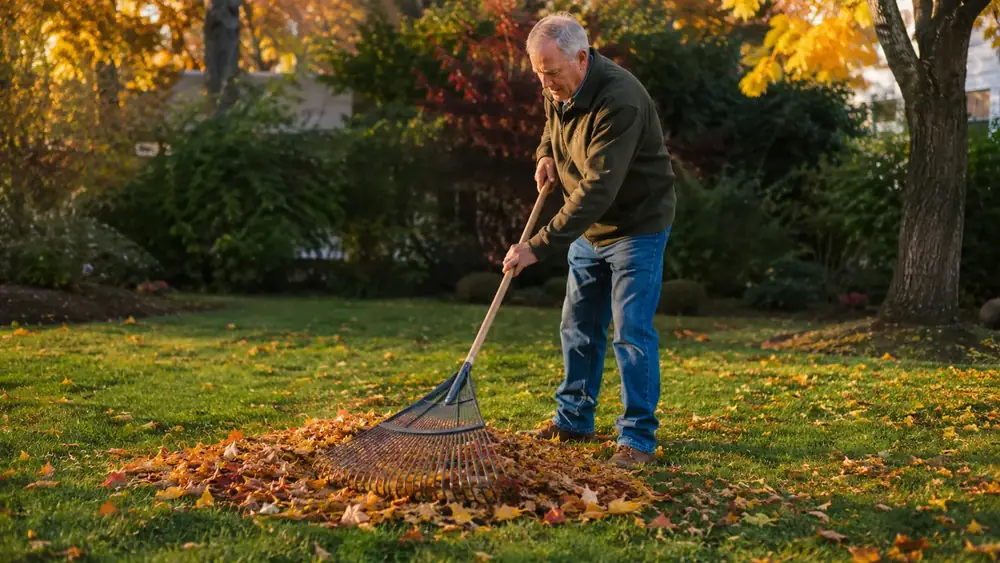
None of that means the bow rake belongs anywhere near established lawn once the grass has filled in. Those same rigid tines that break up compacted soil will just as happily gouge furrows into healthy turf, and I learned that the hard way one November trying to clear a heavy drop of maple leaves off the back lawn with the wrong rake. A leaf rake's wide, flexible fan is built to glide over grass blades and pick up leaves, pine needles, and light debris without scalping the lawn underneath.
The wider head also covers more ground per pass, which matters when you're clearing a quarter acre of oak and maple leaves before the first hard frost. A leaf rake is lighter, easier on your shoulders through that repetitive side-to-side sweep, and honestly the better tool for bagging debris quickly. If your yard's biggest fall chore is leaves and not soil, that's the tool to reach for first.
A leaf rake is also just more pleasant to use for the chore it's built for. There's a rhythm to sweeping leaves into a pile with a wide fan rake that a heavy bow rake can't match, closer to a broom stroke than a digging motion. On a crisp fall afternoon with a full lawn of maple leaves ahead of you, that lighter, faster motion is the difference between finishing before dinner and still being out there at dusk.
There's an arm-fatigue difference worth being honest about too. A bow rake is a pulling, chopping motion, short strokes with real resistance behind each one. A leaf rake is a sweeping motion, lighter and more repetitive. If you've got a big lawn dropping leaves across a whole month of fall, you want the tool built for volume and speed, not the one built for muscle. I've read through the full Walensee bow rake review after a full season of use, and the same pattern holds, it's a soil tool through and through, not a lawn tool that happens to have steel tines.
Compacted Soil and Thatch Won't Budge With a Leaf Rake
If your yard has low spots, mounds, or a thatch layer choking your grass, the Walensee bow rake is built to break through it in one pass, not scratch the surface.
Amazon Check Today's Price on Amazon →The Difference Shows Up After One Season
Buy the wrong rake for the job and you'll feel it within a season, not years. Leaf rakes used on compacted soil splay their tines outward until the fan looks like a bent umbrella, and once that happens, no amount of bending them back fixes the spring in the plastic or thin steel. Bow rakes used aggressively on established turf leave visible track marks and thin patches that take a full growing season to fill back in.
The Walensee's manganese steel head is heat-treated specifically so it holds its shape under that kind of repeated pressure, which is the actual reason it's worth naming as the pick here instead of just saying any bow rake will do. Mine has been through gopher mounds, gravel spreading, and thatch removal, and the tines still sit exactly where they started. That's the difference build quality makes once you're past the first few uses.
Common Mistakes People Make With Either Rake
The most common mistake is buying one rake and expecting it to handle both jobs adequately. It won't. The second most common mistake is buying the cheapest bow rake available and being disappointed when the tines bend after one season of real soil work, then blaming bow rakes in general instead of the specific build quality. Weight and steel grade matter more in a bow rake than in almost any other hand tool in the shed, and it shows up fast.
The third mistake, and I've made this one myself, is using a bow rake on wet, freshly seeded lawn thinking the flat back side is gentle enough. It isn't. Wait until grass is established and has been mowed at least twice before a bow rake goes anywhere near it. Everything before that stage is leaf rake territory, or better yet, no rake at all. If you're dealing with a thatch problem specifically, I've written up the exact technique in a separate guide on why a bow rake levels soil faster than anything else in the shed, worth a read if compacted ground is your main fight.
Who Should Buy Which
Here's the honest breakdown. If you're leveling a yard, prepping a bed, spreading gravel or mulch, or fighting thatch buildup, get the bow rake first, that's the tool doing the actual physical work most homeowners underestimate. If your only fall project is bagging leaves off an established lawn, a leaf rake is cheaper, lighter, and won't tear up your grass. Most gardeners I know end up owning both within a year or two, because the two rakes solve completely different problems. I keep the Walensee in the shed for spring and any soil work, and a cheap leaf rake hanging next to it for October. Neither one sits idle for long.
Budget rarely needs to be the deciding factor here since both tools land in a similar price range, usually somewhere between $15 and $25. So don't let a few dollars either direction talk you into the wrong tool. Buy based on what your yard is actually fighting you on this season, soil or leaves, not on which one happens to be a couple dollars cheaper at the store.
If you're only going to own one rake and your yard has any hills, low spots, bare patches, or clay soil, buy the bow rake. It'll handle occasional light leaf duty in a pinch, awkwardly, but it'll handle it. A leaf rake will never break up compacted soil no matter how many times you try. That asymmetry is really the whole answer to which one to buy first.
Stop Fighting Your Yard With the Wrong Rake
The Walensee Heavy Duty Bow Rake handles the jobs a leaf rake was never built for: leveling, thatch removal, and breaking up packed soil, all with a 63-inch stainless steel handle that won't bend under pressure.
Amazon See Current Price on Amazon →