
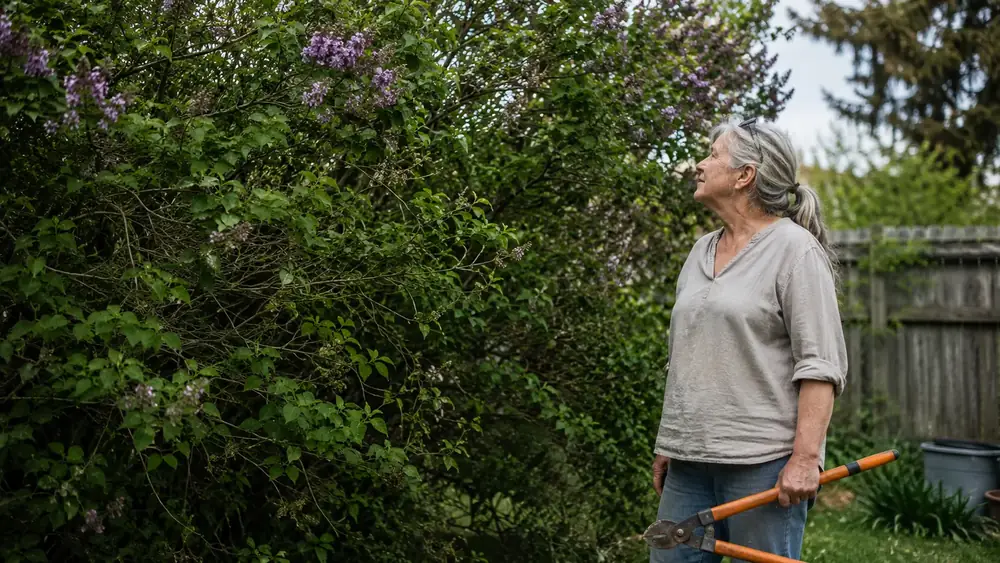
I inherited a hedge of lilacs when we bought this place twelve years ago, and for the first four springs I just let them do their thing. Big mistake. By year five the oldest canes were thick as my wrist, the center was a tangle even the cardinals wouldn't nest in, and the blooms had crept up out of reach where I couldn't even smell them from the porch. What finally turned it around wasn't some fancy technique. It was a decent pair of Fiskars 28 inch bypass loppers and about ninety minutes a Saturday for three weekends running.
Overgrown shrubs happen to almost everyone. You plant something small, it does great for a few years, and then life gets busy and three seasons slip by without a single cut. Suddenly you've got a lilac, forsythia, or viburnum that's twice the size the plant tag promised, blooming only at the top, and about as inviting in the middle as a briar patch. The good news is you can bring almost any overgrown shrub back into shape without killing it or waiting five years for it to recover, as long as you go at it with the right tool and the right order of operations. That's what I want to walk you through here, step by step, the way I actually do it in my own yard.
None of this requires special training. It requires patience, a clear plan, and a lopper that actually cuts instead of chewing. I've loaned my loppers to enough neighbors over the years to know that half the frustration people feel with an overgrown shrub isn't the shrub at all. It's fighting a dull, mismatched tool that leaves ragged cuts and blisters after twenty minutes.
Before You Touch a Single Branch, Get a Lopper That Won't Crush the Cut
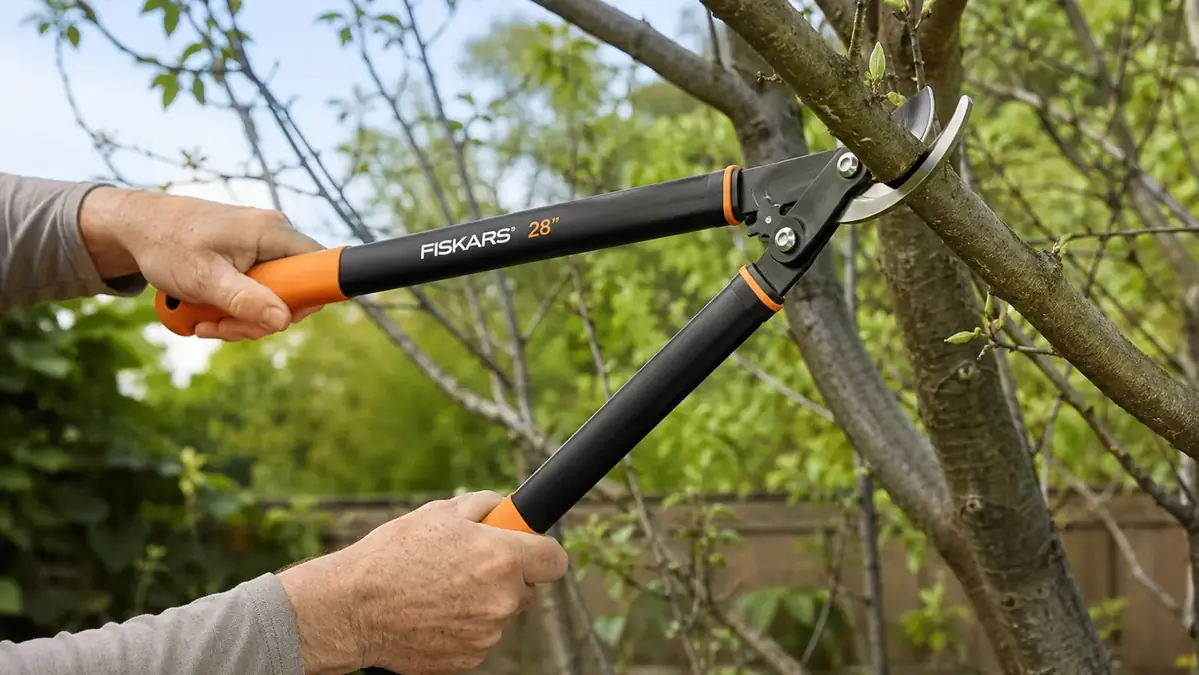
Cheap anvil-style loppers smash stems flat instead of slicing through them, and a crushed cut is exactly how you invite rot and disease into a shrub that's already stressed from years of neglect. The Fiskars 28 inch bypass loppers I use have a sharp, offset steel blade that shears cleanly through green and woody branches up to an inch and a half thick, and the shock-absorbing handle saves your hands and forearms when you're an hour into a big overgrown hedge.
Amazon Check Today's Price on Amazon →Step 1: Pick the Right Week, Not Just the Right Season
Timing matters more than most people think. For the majority of overgrown deciduous shrubs, late winter to very early spring, while the plant is still dormant and bare, is the safest window for a hard renewal cut. You can see the branch structure clearly without leaves in the way, and the shrub has its whole growing season ahead of it to recover. The one big exception is spring-blooming shrubs like lilac, forsythia, and old-fashioned viburnum, which set next year's flower buds shortly after they finish blooming this year. Whack those back in March and you'll cut off every bloom before it ever opens. For those, wait until right after the flowers fade, usually late spring, and do your heaviest cutting then.
Before you make a single cut, walk all the way around the shrub, not just the side facing the house. I do this with a cup of coffee and no tools in hand yet, because the second I'm holding loppers I start cutting instead of looking. Note where the oldest, thickest canes are, where branches cross and rub against each other, and where the center has gone dark and airless. That fifteen minutes of just looking is what keeps you from randomly whacking at the outside and ending up with the same shape, just smaller. I also check the weather. A dry day is easier on you and easier on the plant, since damp, heavy branches are harder to cut cleanly and muddy ground around the base means more compaction with every step you take.
Step 2: Set Up With the Right Tool for the Job
This is where I see people struggle who inherited a rusty old pair of anvil loppers from a parent or grandparent. Anvil-style loppers work like a knife against a cutting board, pressing the branch flat against a metal plate. On live, overgrown wood that's often still got some green give to it, that crushing action bruises the stem instead of severing it cleanly, and a bruised cut heals slower and scars worse. Bypass loppers work more like scissors, with a curved blade sliding past a lower jaw, and they leave a clean angled cut that closes over quickly. That's the whole reason I switched to a pair of Fiskars bypass loppers years ago and never looked back.
Wipe the blades down with a rag before you start, and if you've been cutting anything diseased in the yard recently, give the blade a quick pass with rubbing alcohol so you're not spreading a problem from one shrub to the next. Put on real gloves, not gardening gloves so thin you can feel a thorn through them, and if your overgrown shrub is anywhere close to head height, safety glasses are worth the minor annoyance. Overgrown shrubs fight back, and you'll be reaching into the middle of the plant more than once, often with a springy branch snapping back toward your face right after you cut whatever was holding it down.
Step 3: Remove the Three D's First
Every renewal pruning job starts the same way, no matter the shrub. Look for the three D's: dead, damaged, and diseased wood. Dead branches are usually gray or brittle with no live buds and they scrape bark that's a different color underneath if you nick them with a fingernail. Damaged branches are ones that got broken by wind, snow load, or a lawnmower and are hanging or splitting. Diseased wood often shows discoloration, cankers, or oozing. Cut all three of those out first, all the way back to the base of the shrub or to a healthy main stem. Don't leave stubs.
This step alone usually opens up a shockingly large amount of space. On my lilac, the three D's removed about a fifth of the total mass before I'd even started shaping anything, and the middle of the shrub went from pitch dark to letting real light through. That matters because good airflow through the center is what keeps powdery mildew and other fungal problems from settling in for good, and it's usually the first sign a neighbor notices even before the shrub blooms again.
Step 4: Make Every Cut at the Right Angle and Spot
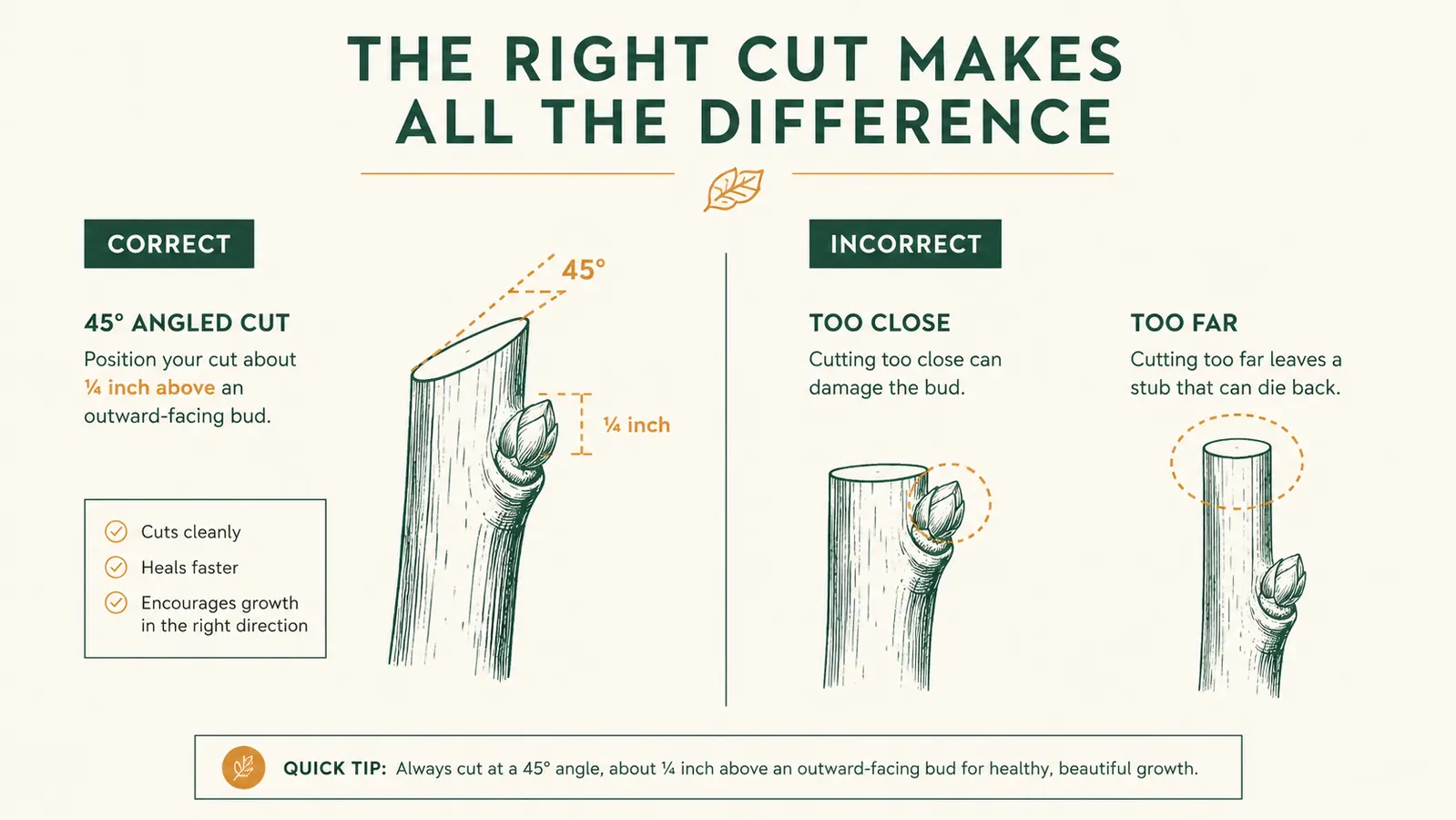
Once the dead wood is gone, you're working on shaping and thinning live growth. For smaller stems, cut at roughly a 45 degree angle, about a quarter inch above an outward-facing bud. The angle sheds water away from the cut instead of pooling on it, and cutting above an outward bud pushes new growth away from the center of the plant instead of back into it, which is how shrubs get tangled in the first place. Cut too close to the bud and you can damage it. Cut too far above it and you leave a dead stub that just invites decay.
For the thick old canes, the ones that gave me trouble on my lilac, I use what's sometimes called the undercut method. Start the cut from the underside of the branch about a third of the way through, then finish it from the top. This keeps the bark from tearing down the trunk when the branch finally lets go, which happens more than you'd expect on a heavy overgrown cane. This is exactly where the reach and leverage of a full-length bypass lopper earns its keep. My 28 inch Fiskars loppers get through branches up to an inch and a half thick without me having to muscle it or resort to a saw, and the longer handles give me enough leverage that I'm not straining my shoulder on every single cut.
For the very oldest, thickest canes, sometimes the right cut is the most dramatic one: straight down to the ground or to within a few inches of it. This is called renewal or rejuvenation pruning, and it sounds harsh, but most established shrubs handle it fine because they've got a strong root system to push new growth from. Removing one or two of the oldest canes completely each year forces the plant to send up fresh, younger stems that flower better than the old wood ever did, and those younger canes tend to stay a manageable thickness for your loppers for several years before you need to rotate them out too.
Step 5: Use the One-Third Rule to Avoid Shocking the Plant
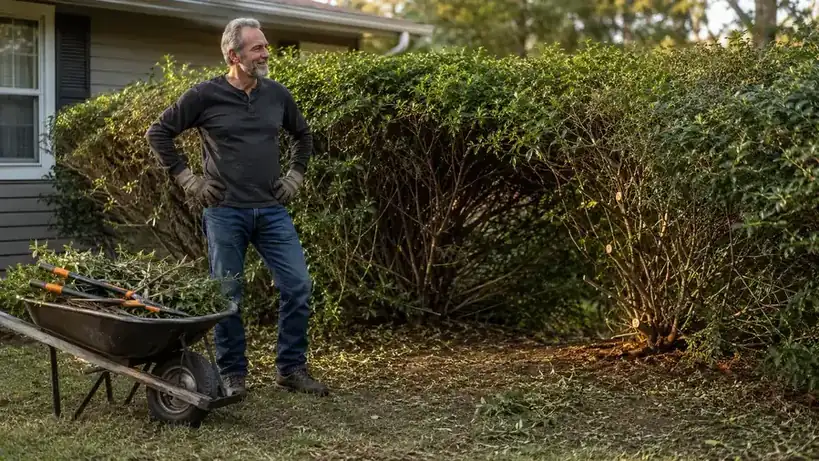
Here's the mistake I made the first time I tackled that overgrown lilac hedge. I got excited, I had good loppers, and I tried to fix five years of neglect in one long Saturday. I took off way more than the shrub could recover from in one season, and it sulked for most of the following summer with sparse, weak growth. The rule I follow now, and the one most experienced gardeners will tell you, is to never remove more than about a third of a shrub's total growth in a single year.
If a shrub is truly overgrown, badly overgrown, plan on spreading the renewal work over two or three seasons instead of one. Take out a third of the oldest, thickest wood this year, let it recover and push new growth, then come back next year for another third. It feels slower, but you end up with a fuller, healthier shrub faster than if you'd shocked it all at once. After each pruning session, I give the shrub a deep watering and a fresh layer of mulch around the base, which helps it put its energy into new growth instead of drought stress on top of the pruning stress. By the third spring, my lilac was fuller than it had ever been, blooming from the ground up instead of just at the top.
A shrub that's been ignored for five years didn't get overgrown in one season, and it doesn't need to get fixed in one either.
What Else Helps
Bypass loppers handle the bulk of the work on most overgrown shrubs, but a couple of other tools make the job easier. A pair of hand pruners is worth keeping in your other pocket for the thin, whippy new growth under half an inch, where full-size loppers are overkill and harder to control precisely. And for anything thicker than the one and a half inch capacity of your loppers, usually the oldest, most established canes on a shrub that's been neglected a decade or more, a folding pruning saw will get through it without you fighting the branch. I keep all three in a bucket by the back door from March through June, because overgrown shrubs rarely get fixed in a single visit, and having the right tool on hand means I actually do the follow-up work instead of putting it off another year. A tarp or an old bedsheet spread under the shrub before you start also saves you a mountain of raking afterward, since renewal pruning drops a lot more debris than a light trim ever does.
Give Your Shrubs the Same Loppers I Use Every Spring
If your shrubs have gotten away from you the way my lilacs did, don't start with dull hand-me-down anvil loppers. A clean-cutting pair of Fiskars 28 inch bypass loppers makes the difference between a shrub that bounces back and one that sits there scarred and sulking. Grab a pair before your next pruning weekend and the job will go a lot faster than you're expecting.
Amazon Check Today's Price on Amazon →