
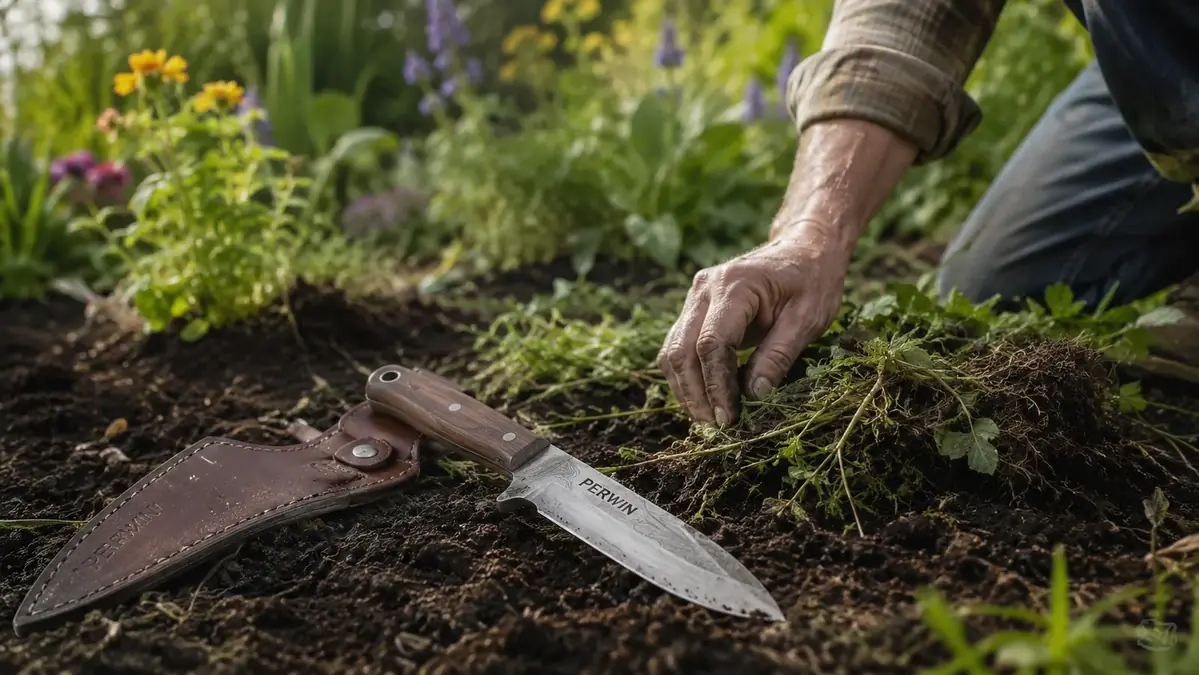
Last spring I stood over my hosta bed with a trowel in one hand and a pair of pruning snips in the other, trying to divide a clump that had gotten so root-bound I could barely get the trowel blade under it. I ended up going back to the shed three separate times that afternoon for a different tool, a bulb planter, a weeding fork, an old steak knife I keep out there for cutting through tangled roots, which tells you everything about how poorly my old setup was working. That's the day I finally ordered a hori hori knife, and after reading through a stack of reviews I landed on the PERWIN. I've now carried it through one full growing season, from that first stubborn hosta clump in April through pulling the last of the dahlia tubers in October, and I want to walk you through exactly what that season looked like.
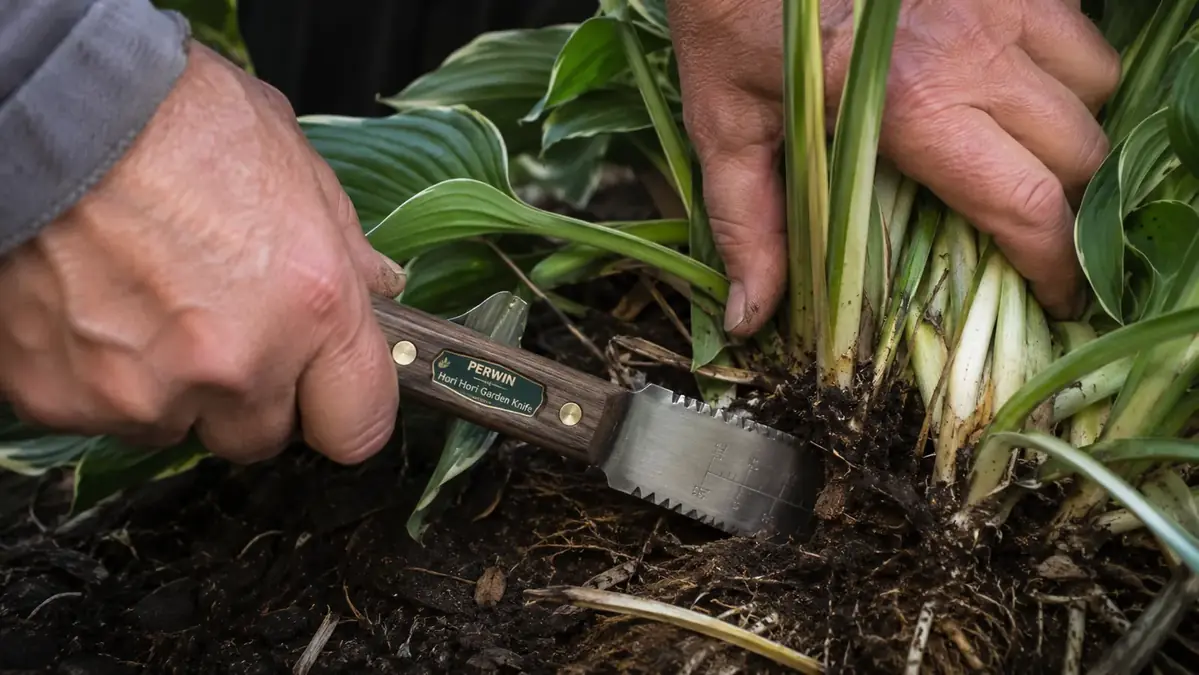
PERWIN builds this one with a 7-inch stainless steel blade, one edge straight and sharp for slicing through roots, the other serrated for sawing, and a full-tang walnut wood handle that runs the length of the grip rather than stopping short like the cheaper stamped-steel versions I'd handled before. It comes with a sheath that clips to a belt or garden bag, which sounds like a small detail until you've spent a season not losing a tool in the mulch every other week.
The Quick Verdict
A genuinely versatile single tool that replaced a trowel, a weeding fork, and a bulb planter in my garden bag, with a blade that held its edge well and a sheath that kept it within reach all season, though the tip needs a light touch in heavy clay.
Amazon Check Today's Price →Still hauling three separate tools to the garden bed every time you weed or plant?
The PERWIN hori hori knife took over almost every job my old trowel and weeding fork used to split between them. Check today's price on Amazon before your next weekend in the beds.
Amazon Check Today's Price on Amazon →How I've Used It
I've got a quarter acre with a mix of raised vegetable beds, a long perennial border along the back fence, and a shade garden under two old maples where the hostas and ferns live. Over six months I used the PERWIN to divide hostas and daylilies, dig up bindweed and dandelion roots that had wormed their way a foot deep into the border, plant close to a hundred daffodil and tulip bulbs in October, and cut open the burlap around three balled-and-burlapped shrubs I planted in May. That's a wide range of jobs for one blade, and it's exactly the range I hoped a hori hori would cover.
I kept it clipped to my waistband most days because I wanted to see if I'd actually reach for it or if it would end up back in the shed with the tools I bought and barely used. Short version, it stayed on my belt from April straight through the first hard frost, and where it fell short of a dedicated tool, I'll tell you exactly where, because a review that only tells you the good parts isn't worth much to you.
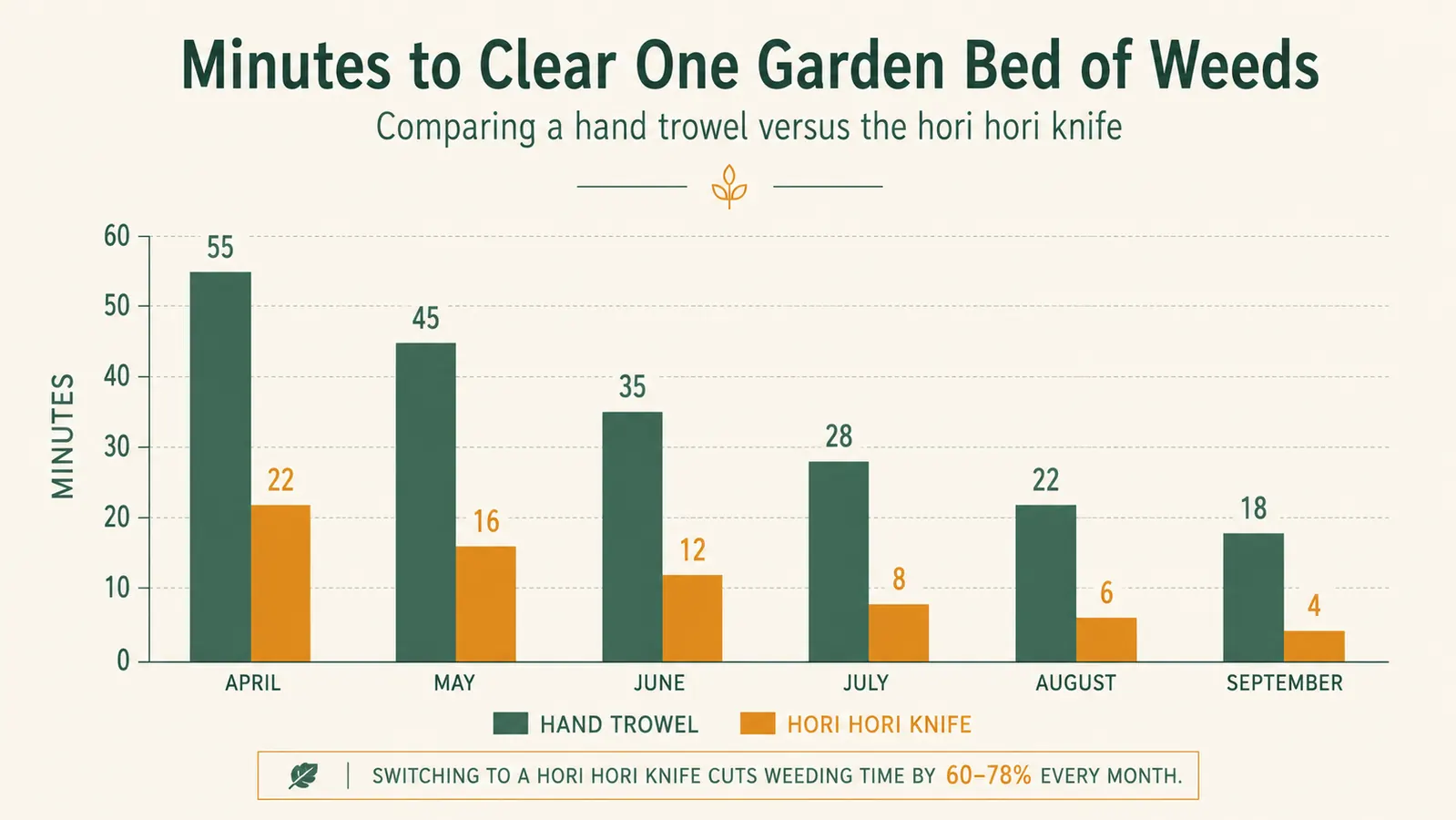
The bindweed was the real test early on. That stuff sends roots down deep and sideways under the border, and my old trowel would snap the top off and leave the root to regrow within a week, over and over, all summer. The serrated edge on the PERWIN let me saw down alongside a root and lever it out mostly intact, and the pointed tip got into gaps between rocks and mulch that a wider trowel head couldn't reach at all. I cleared a six-foot stretch of border in about twenty minutes that used to take me the better part of an hour with a trowel and a lot of frustration.
The Blade and the Edge
The two-sided blade is the whole idea behind a hori hori, and it earns its keep once you get used to which side to reach for. The straight edge slices cleanly through root balls when I'm dividing perennials, and it did clean work splitting a dense daylily clump into four separate divisions without shredding the roots the way tearing them apart by hand always does. The serrated side handles the rougher jobs, sawing through woody roots, cutting twine off burlap, even trimming back a few overgrown groundcover runners I didn't feel like fetching pruners for.
The steel held its edge for most of the season with just an occasional pass on a sharpening stone, maybe once every six or seven weeks of regular use. That's a fair schedule for a blade that's slicing through soil, roots, and the occasional buried rock all summer, not a flaw, just something to plan for the same way you'd expect to touch up a good kitchen knife. The stainless construction also meant I never dealt with rust spots, even on the weeks I forgot to wipe it down before it went back in the sheath, which is more forgiveness than I got out of the carbon steel trowel it replaced.
The tip is where I had to adjust my technique a little. It's sharp and pointed, great for working into tight root balls and between plants in a crowded bed, but on the two spots in my yard where the soil turns to dense clay, I had to work it in with more of a rocking motion instead of a straight jab, or the tip would deflect off to the side rather than driving in. That's not really a fault of the tool, clay is unforgiving on any hand digging tool, but if your soil runs heavy, it's worth knowing going in.
The Handle, Sheath, and Everyday Carry
I'm 58 and I've got a touch of arthritis in my thumbs, so how a tool sits in the hand matters more to me now than it used to. The full-tang walnut handle runs the entire length of the grip rather than being a hollow plastic shell around a short metal tang, and I could feel that difference the first time I put real pressure behind a cut. There was no flex, no give, none of that unsettling wobble I've felt with cheaper garden knives where you can feel the blade wanting to twist loose from the handle.
The sheath is the detail that actually changed my habits this season. It clips onto a belt or the strap of my garden apron, and once I got in the routine of sliding the knife back in after every use instead of setting it down on the ground, I stopped losing tools in the mulch. Before this, I'd lose a trowel in the flower bed at least twice a summer, usually finding it weeks later with the lawnmower or by stepping on it barefoot. I didn't lose the PERWIN once, and by August that felt like the single biggest quality-of-life change out of the whole purchase.
The walnut handle darkened slightly over the season from sun and handling, which I actually like, it looks like a tool that's been used rather than one still sitting in a display case. It never got slick or slippery even on the sweatiest July afternoons, and the hanging hole at the base means I can also hook it on a nail in the shed on the days I don't want it on my belt.
What Else I Considered
Before I settled on the PERWIN, I looked hard at a plain garden trowel with a longer handle, thinking I could just live with what I already had if I upgraded that one piece. But a trowel is a scoop, it's built to move loose soil, not to cut through a root ball or saw a woody bindweed root, and no amount of sharpening a trowel edge was going to fix that mismatch. I also borrowed a neighbor's stamped-steel hori hori for an afternoon to compare against a solid-tang model like the PERWIN, and the difference showed up fast, hers flexed noticeably when I put weight on the tip in firm soil, in a way that made me nervous about bending the blade.
I also considered just buying a bulb planter and a weeding fork separately instead of one do-it-all tool, since that's what most of my neighbors carry. But that puts me back to three tools scattered around the yard instead of one on my belt, and after a season of the hori hori I don't think I'll go back to that. There were maybe a handful of jobs, mostly deep post-hole style digging for a new shrub, where a dedicated spade did the job faster, but those are a small fraction of what I actually do in a normal week outside.
Price factored in too, though it wasn't the deciding factor. The PERWIN sits in the middle of what I was comparing, not the cheapest hori hori on the shelf and not the priciest, and after a full season I think that middle price bought me a blade that didn't flex and a handle that didn't loosen. A cheaper stamped tool that bends the first time it hits a rock costs you more in frustration than the few dollars it saves you up front, and that's become one of my standing rules for buying garden tools.
Where It Struggled
I want to be straight with you about the tradeoffs, because no single tool replaces every job in the shed. In that dense clay corner of my yard I mentioned, the pointed tip needed a slower, more deliberate approach than a wider digging tool, and for anyone gardening in truly heavy clay soil across most of the yard rather than just a corner or two, I'd expect more of that same resistance.
It's also not a substitute for a full-size shovel or spade on bigger jobs. When I planted those three balled-and-burlapped shrubs in May, the hori hori was great for cutting the burlap and twine and for the final fine-tuning around the root ball, but I still needed a spade to dig the actual planting hole. If you're expecting one small knife to replace every digging tool you own, it won't, and I don't think any tool this size honestly could.
The blade length also means you're working closer to the ground than with a long-handled tool, which was fine for me most of the season but did leave my knees a little sorer on the days I spent an hour or more dividing perennials. I've started using a kneeling pad alongside it now, which solved the problem, but it's worth knowing that this is a get-down-and-work tool, not a stand-and-reach one.
What I Liked
- Full-tang walnut handle feels solid with zero flex under real digging pressure
- Dual edge, straight for slicing and serrated for sawing, covers most weeding and planting jobs
- Sheath clips to a belt and genuinely stopped me from losing the tool in the beds
- Stainless blade resisted rust all season even with some inconsistent cleaning
- Replaced a trowel, a weeding fork, and a bulb planter for most everyday jobs
Where It Falls Short
- Pointed tip deflects rather than driving straight in on dense clay soil
- Not a substitute for a spade when digging a full planting hole
- Working close to the ground can be tough on the knees during long sessions
- Blade needed a sharpening stone touch-up roughly every six to seven weeks of regular use
I cleared a six-foot stretch of bindweed-choked border in twenty minutes that used to eat the better part of an hour, and that's when the PERWIN earned its spot on my belt for good.
Who This Is For
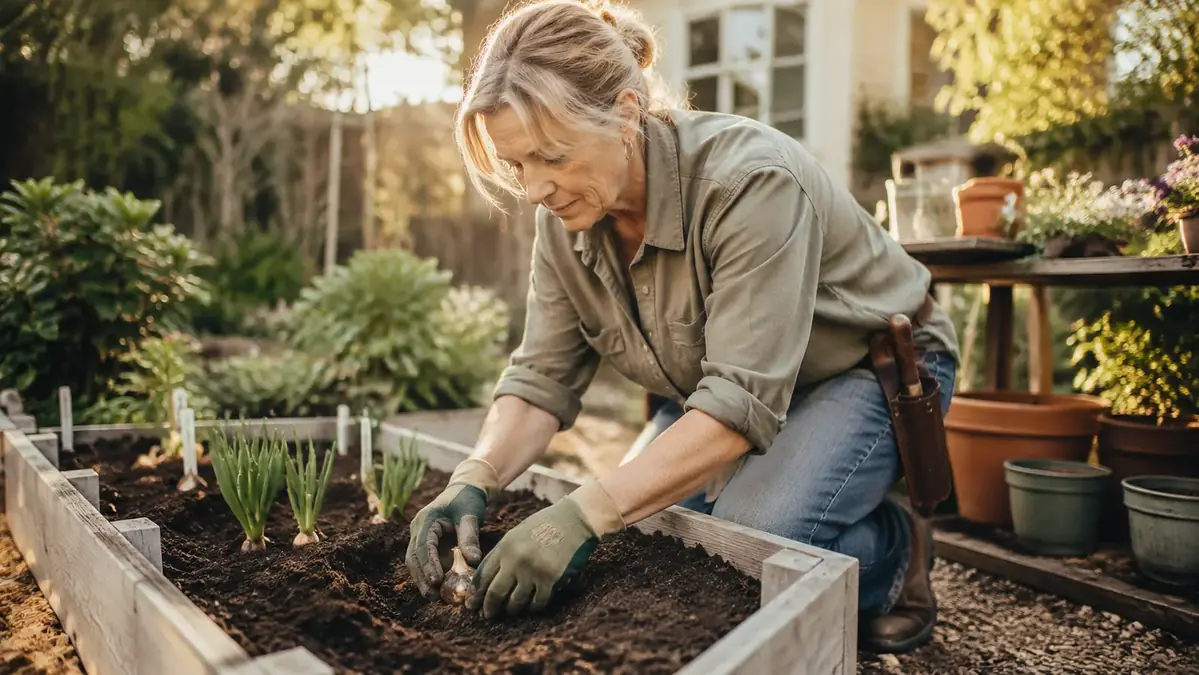
If your garden work is mostly weeding, dividing perennials, planting bulbs, or setting out annuals and small shrubs, this earns a permanent spot in your garden bag. It's especially good for anyone dealing with stubborn, deep-rooted weeds like dandelion or bindweed, because the serrated edge gets under a root in a way a plain trowel just can't. Gardeners who are tired of losing tools in the mulch will appreciate the sheath more than almost anything else on this list, and anyone managing several beds who's sick of walking back and forth to the shed for a different tool every twenty minutes will feel the difference the first weekend they use it.
It's also a solid pick if you're building out a raised bed vegetable garden, since the marked, sturdy blade handles everything from opening a furrow for seeds to digging out a spent tomato plant at the end of the season. I'd put anyone doing regular hands-and-knees garden work, rather than mostly mowing and hedge trimming, squarely in the target buyer for this tool.
Who Should Skip It
If your soil is heavy clay across most of your yard rather than just a patch or two, you'll fight the pointed tip more than you'll enjoy it, and a wider digging tool might serve you better as your primary. And if your yard work is mostly mowing, trimming hedges, and light container maintenance without much hands-in-the-dirt planting or weeding, this is more tool than you'll actually reach for on a regular basis.
If you're planting large shrubs or trees on a regular basis, you'll still need a real spade for the hole itself, so don't expect this to be your only digging tool if that's the bulk of your garden work. For everything smaller than that, though, it's hard to go back to a plain trowel once you've used one of these for a season.
One season in and I finally stopped losing tools in the mulch every other week.
If you're tired of juggling a trowel, a weeding fork, and a bulb planter for jobs that all need the same reach, see today's price on the PERWIN hori hori knife on Amazon.
Amazon Check Today's Price on Amazon →